
Categories
Central Florida, Florida Trends, Home OwnershipPublished March 2, 2026
Understanding the Proposed Florida Homestead Property Tax Change

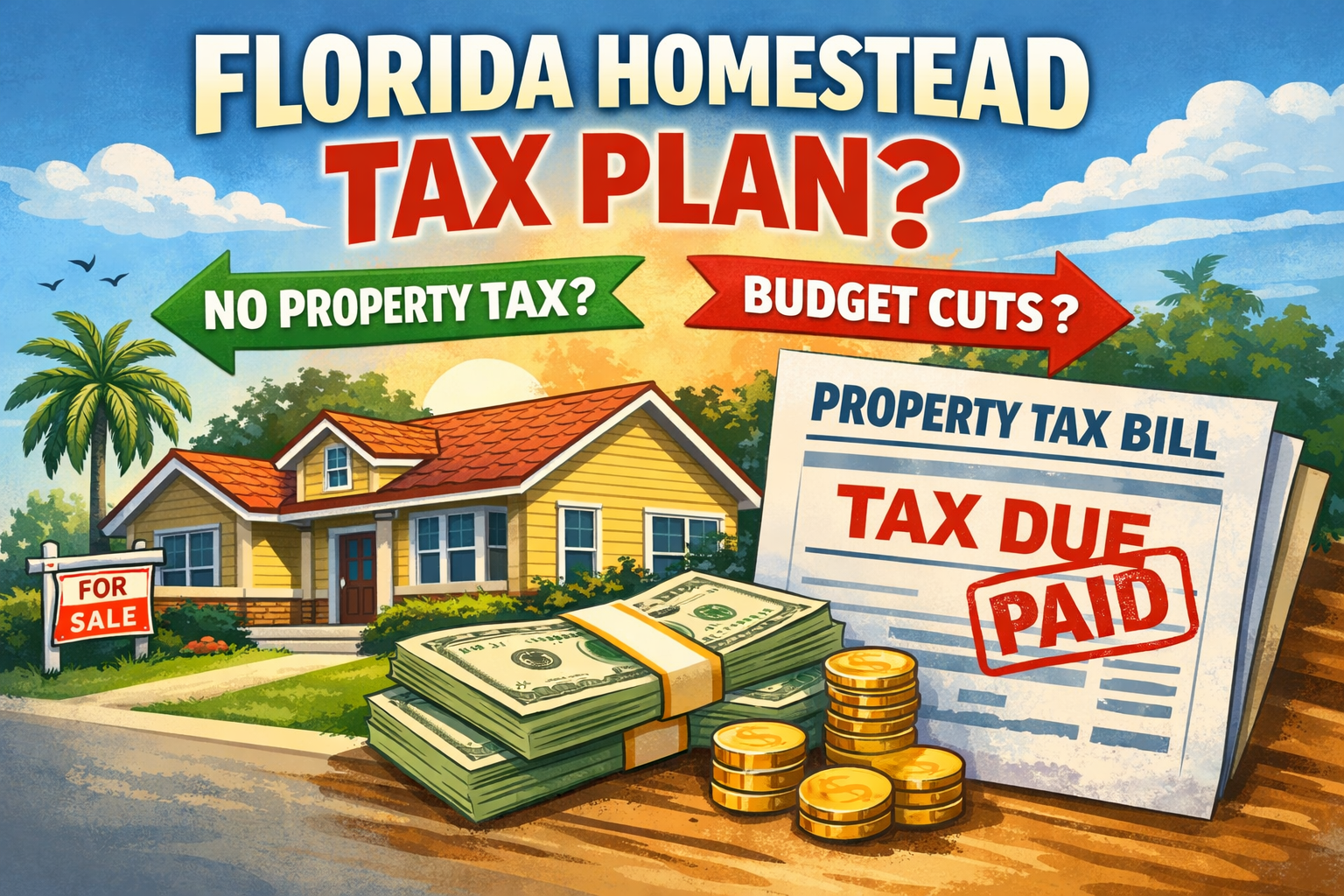
Florida lawmakers are advancing a major proposal to phase out or eliminate non-school property taxes on homestead properties—the primary residences owned by Floridians. The most talked-about version is House Joint Resolution 203 (HJR 203), which would gradually phase out non-school property taxes on homesteads over time, with the goal of effectively zeroing out most property taxes for homeowners if voters approve a constitutional amendment this November.
🧾 What Non-School Property Taxes Are
In Florida, property taxes fund various local services:
- School districts
- Cities and counties
- Fire districts, libraries, special districts, etc.
Under these proposals, school taxes would continue even if non-school taxes on homesteads are eliminated.
The change would only apply to homesteaded homes—your primary residence—not vacation homes, rentals, or commercial properties.
Before becoming law, the constitutional amendment would have to be approved by at least 60 % of Florida voters in the November 2026 general election, assuming it first clears the Florida Senate.
🏡 Why This Matters to Florida Homeowners
Property taxes are one of the biggest costs of owning a home in Florida, especially as home prices continue to rise. For many middle-income families and retirees on fixed incomes, rising taxes add financial strain to everyday living.
Supporters of the proposal argue that eliminating these taxes would make homeownership more affordable and attractive, helping current residents and making Florida more competitive with other states.
👍 Pros: Benefits of Eliminating Homestead Property Taxes
💰 Lower Costs for Homeowners
Eliminating non-school property taxes would significantly reduce annual housing costs for millions of Florida homeowners. Many could see their tax bills cut substantially (often by half or more against current totals).
📈 Incentive to Own and Stay
This could encourage more people to buy homes and stay in them longer, which advocates say strengthens communities and stabilizes neighborhoods.
🧓 Especially Helpful for Seniors and Low-Income Residents
People on fixed incomes (like seniors or retirees) would see recurring tax relief, possibly helping them age in place without being taxed out of their homes.
🎯 Targeted to Full-Time Residents
Because the benefit only applies to homesteaded properties, second homes and investment properties would still be taxed, which proponents argue is a fairer tax treatment for locals.
👎 Cons: Drawbacks and Concerns
⚠️ Huge Revenue Shortfall for Local Governments
Property tax revenue is the largest source of funding for local services such as police, fire, roads, sanitation, and libraries. Estimates suggest eliminating these taxes could reduce local government revenues by billions of dollars annually—from around $4.8 billion up to $14.7 billion or more depending on the version of the proposal.
Even though some proposals include constitutional language to protect public safety funding (holding budgets at current levels), they don’t account for future cost increases like salary growth, new equipment needs, or inflation.
🏛️ Pressure on Local Services and Infrastructure
With less revenue, cities and counties could struggle to pay for:
- Police and fire protection
- Roads and bridges
- Waste management
- Parks and libraries
Smaller or slower-growing communities that rely heavily on residential tax rolls could be hit especially hard.
📊 Shift of Tax Burden Elsewhere
To make up for lost revenue, local governments might:
- Raise sales taxes
- Increase fees and impact charges
- Cut services or seek state subsidies
Lower-income households could end up paying more in consumption taxes or fees, even if they save on property tax.
🧠 Uncertain Long-Term Effects
Some economists argue that simply removing property tax revenue without a clear replacement plan may hurt fiscal stability and make long-range budgeting more difficult for local authorities.
📌 Wrap-Up: A Big Change With Big Trade-Offs
The Florida homestead tax elimination proposal is one of the most ambitious property tax reform efforts in decades. It could dramatically reduce homeowners’ expenses, but it also raises tough questions about how to sustain local services that residents depend on.
Here are the key takeaways:
- ✔️ Potential for real tax relief for homeowners
- ✔️ Could make living in Florida more affordable
- ⚠️ Creates major revenue gaps for cities and counties
- ⚠️ May shift tax burdens to other sources
- ⚠️ Still requires voter approval and legislative action
Whether you see the proposal as a win for homeowners or a risk to local government stability depends largely on how—if at all—lawmakers and voters decide to replace revenue or restructure local financing in tandem with the tax changes.

Charles "Chuck" Shaver
| Chuck Shaver | The Shaver Group | Keller Williams Heritage Realty
or another way